Why Using One Contractor for Crane, Steel Erection, and Fabrication Reduces Project Risk
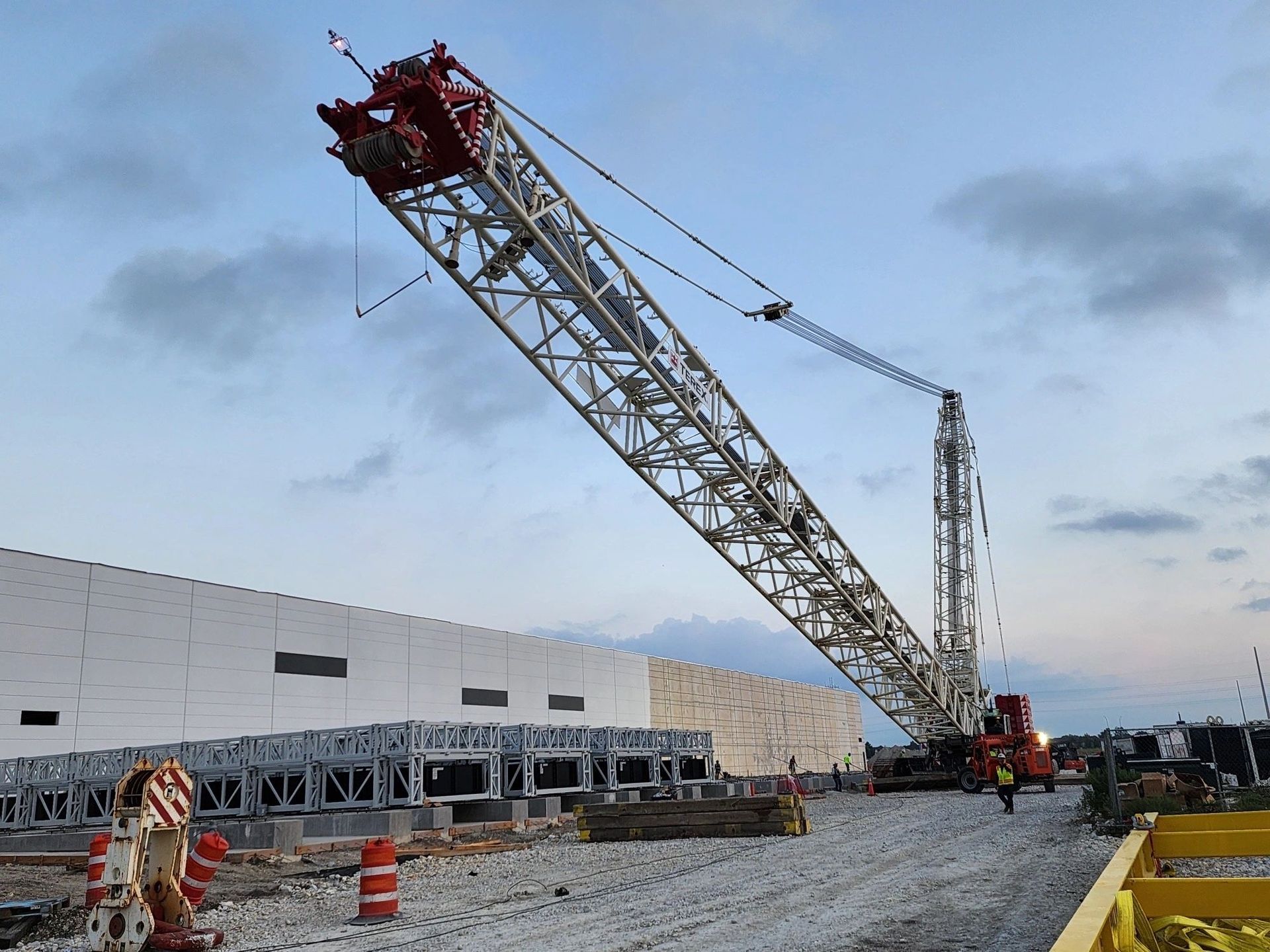
On industrial and commercial construction projects, risk rarely comes from a single failure. More often, it builds quietly through miscommunication, handoffs between subcontractors, and assumptions about who is responsible for what. When crane operations are involved, those risks increase significantly.
One of the most effective ways to reduce risk on crane-driven projects is to consolidate scope under a single contractor who can manage crane operations, fabrication, and erection together. This integrated approach improves coordination, accountability, and predictability—especially on projects where lifting activities are on the critical path.
The Hidden Risk of Fragmented Scope
Traditional project delivery often separates crane services, fabrication, and erection among multiple subcontractors. While this approach may appear flexible on paper, it frequently introduces real-world challenges.
Common issues include:
- Misaligned schedules between trades
- Incomplete or incompatible fabrication details
- Last-minute field modifications
- Disputes over responsibility
- Delays caused by coordination gaps
Each subcontractor may perform their individual scope correctly, yet the overall project still suffers because no single party owns the full process.
Crane Operations Amplify Coordination Risk
Crane operations magnify coordination challenges because they interact with nearly every trade on site.
Crane lifts depend on:
- Accurate fabrication dimensions
- Correct sequencing of erection activities
- Proper site access and ground preparation
- Timely availability of materials and crews
When crane services are disconnected from fabrication and erection, even small discrepancies can cause major delays.
Where Things Commonly Break Down
Projects with fragmented crane and construction scopes often experience predictable failure points.
Fabrication Misalignment
Fabricated steel or piping that does not align with lift plans can require:
- Field modifications
- Additional crane time
- Re-rigging or re-lifting
- Schedule impacts
These issues are rarely intentional—they result from lack of coordination between fabrication and lift planning.
Erection Sequencing Conflicts
Steel erection requires precise sequencing. When erection crews and crane operators are not aligned:
- Lifts may be scheduled out of order
- Cranes may need repositioning
- Additional mobilizations may be required
Each adjustment adds cost and risk.
Responsibility Gaps
When multiple subcontractors are involved, accountability can become unclear.
Questions like:
- Who verifies lift readiness?
- Who coordinates crane access?
- Who resolves conflicts in the field?
Without a single point of responsibility, issues take longer to resolve—and often escalate.
The Advantage of a Single, Integrated Contractor
Using one contractor for crane operations, fabrication, and erection changes the project dynamic entirely.
Instead of managing handoffs between multiple subs, project teams work with a single entity responsible for:
- Planning
- Execution
- Coordination
- Outcomes
This model significantly reduces risk on complex, crane-driven projects.
Integrated Planning Improves Execution
When one contractor handles both planning and execution:
- Lift plans reflect real fabrication details
- Crane selection aligns with erection sequencing
- Site constraints are addressed early
This alignment reduces assumptions and improves predictability.
Fewer Handoffs, Fewer Errors
Every handoff between subcontractors introduces potential error.
An integrated contractor reduces:
- Miscommunication
- Duplicate effort
- Conflicting assumptions
With fewer parties involved, information flows faster and decisions are made more efficiently.
Improved Schedule Control
Crane operations often dictate the pace of construction. When crane services are integrated with fabrication and erection:
- Scheduling becomes more realistic
- Lift timing aligns with material readiness
- Delays are easier to mitigate
This is especially valuable on projects with tight timelines or limited crane availability.
Better Risk Management
Integrated contractors are better positioned to identify and manage risk because they see the entire scope—not just isolated tasks.
This includes:
- Identifying lift challenges during fabrication
- Adjusting erection sequencing proactively
- Planning crane access alongside civil and concrete work
Risk is addressed early, when solutions are easier and less costly.
Safety Benefits of Integrated Execution
Safety improves when crane operations, fabrication, and erection are coordinated by one team.
Benefits include:
- Consistent safety standards across scopes
- Clear communication during lifts
- Fewer last-minute changes
- Better jobsite awareness
When crews understand the full process, they are better prepared to execute safely.
Cost Predictability Over Lowest Price
While integrated services may not always appear lowest-cost upfront, they often reduce total project cost.
Cost savings come from:
- Fewer delays
- Reduced rework
- Lower crane standby time
- Fewer change orders
For owners and general contractors, predictability often matters more than initial price.
Integrated Support Is Especially Valuable on Industrial Projects
Industrial projects present unique challenges:
- Active facilities
- Restricted access
- High safety requirements
- Tight shutdown windows
In these environments, coordination failures can be extremely costly. Integrated crane and construction support provides better control over these variables.
When Integrated Services Make the Most Sense
While not every project requires integrated services, they are especially beneficial when:
- Crane operations are on the critical path
- Lifts are complex or high-risk
- Fabrication tolerances are tight
- Schedule flexibility is limited
- Multiple trades must coordinate closely
These conditions are common on industrial and commercial projects.
A Shift Toward Accountability
Using one contractor for crane operations, fabrication, and erection creates clear accountability.
Instead of managing disputes between subs, project teams work with a partner who:
- Owns the plan
- Executes the work
- Resolves issues
- Delivers results
This shift simplifies decision-making and improves outcomes.
Final Thoughts
Crane operations introduce significant risk—but that risk can be managed effectively through integrated operated crane services.
By consolidating crane services, fabrication, and erection under one contractor, project teams gain:
- Better coordination
- Improved safety
- Stronger schedule control
- Clear accountability
For industrial and commercial projects where crane operations drive success, integration is not just a convenience—it’s a strategic advantage.
Search
Recent Post