Common Crane & Rigging Mistakes That Cause Delays on Industrial Projects
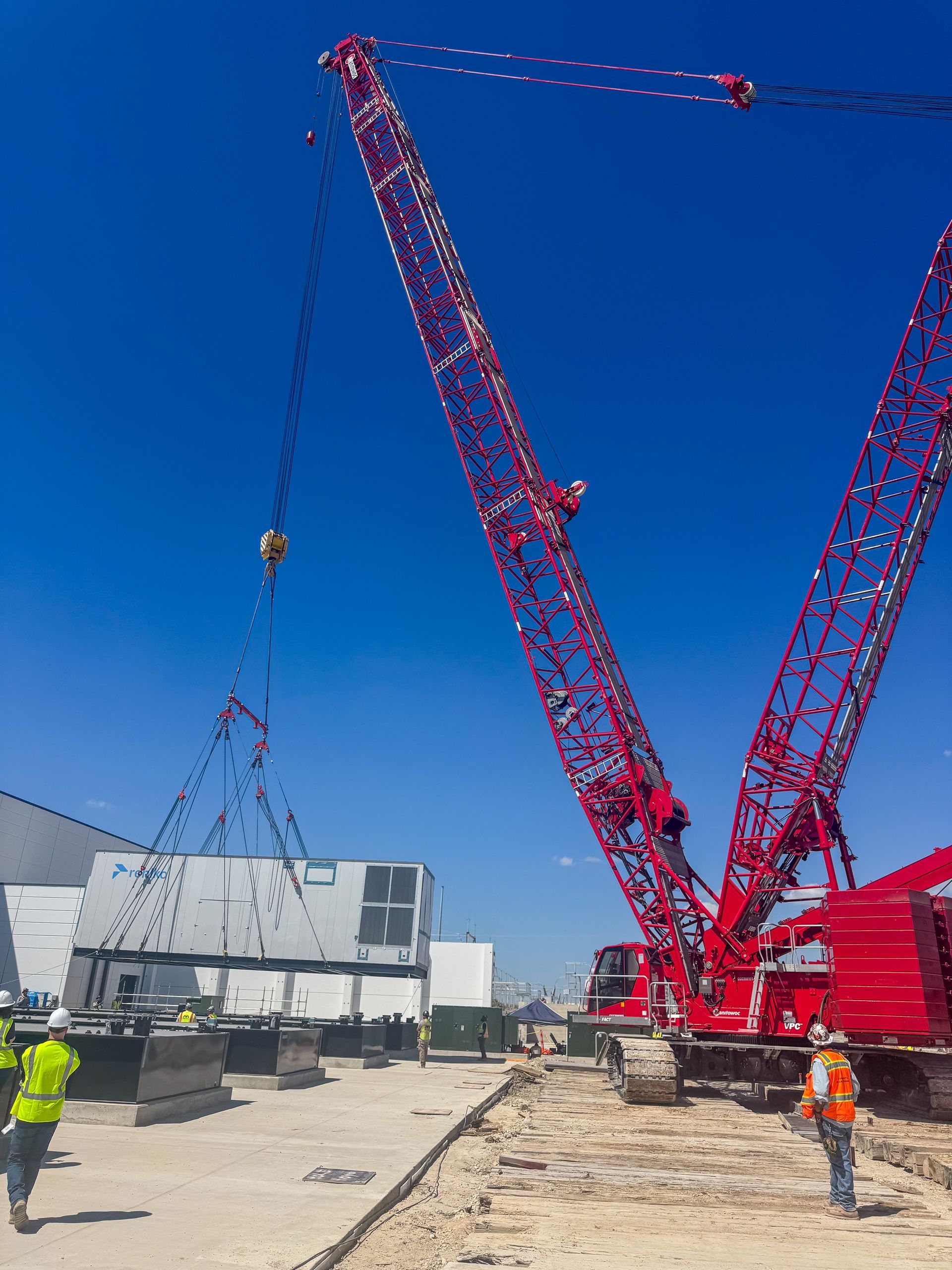
On industrial and commercial construction projects, crane operations are often on the critical path. When a crane is delayed, the entire jobsite feels it—crews stand idle, schedules slip, and costs rise quickly.
Most crane-related delays are not caused by mechanical failure. They are the result of planning gaps, coordination breakdowns, and preventable mistakes that compound once work is underway. Understanding these common issues—and how to avoid them—can save significant time and money on crane-driven projects.
1. Inadequate Lift Planning
One of the most common causes of crane delays is insufficient lift planning. When lifts are treated as routine without evaluating real-world conditions, problems surface quickly in the field.
Common planning issues include:
- Incorrect load weight assumptions
- Incomplete rigging details
- Underestimating required radius or boom length
- Failing to account for site obstructions
These issues often force last-minute changes, crane reconfiguration, or even demobilization and remobilization.
How to avoid it:
Use engineered lift planning for complex or high-risk lifts. Planning should account for actual site conditions, not best-case assumptions.
2. Choosing the Wrong Crane for the Job
Selecting a crane based solely on availability or daily rate often leads to inefficiencies and delays.
Examples include:
- Using an undersized crane that struggles at required radii
- Selecting a highly mobile crane when stability is the priority
- Choosing a crane that cannot remain set for the project duration
When the crane is wrong for the application, productivity suffers and safety margins shrink.
How to avoid it:
Crane selection should be driven by engineered lift planning that evaluates capacity, radius, ground conditions, and sequencing—not convenience.
3. Poor Coordination Between Trades
Crane operations depend on coordination with fabrication, erection, civil work, and other trades. When these activities are not aligned, delays are inevitable.
Common coordination problems include:
- Materials not ready when the crane arrives
- Incomplete site access or ground prep
- Conflicting work areas
- Erection sequencing mismatches
Even small misalignments can result in hours—or days—of lost crane time.
How to avoid it:
Coordinate crane operations early and continuously with all affected trades. Integrated planning reduces handoffs and miscommunication.
4. Inaccurate or Incomplete Fabrication
Fabrication issues frequently create delays during crane operations.
Examples include:
- Dimensional inaccuracies
- Missing lift points
- Unclear or incorrect shop drawings
- Components requiring field modification
When fabricated components do not match lift plans, crane operations must stop while issues are resolved.
How to avoid it:
Ensure fabrication is coordinated with lift planning and erection requirements. When fabrication and crane services are aligned, these issues are identified earlier.
5. Inadequate Ground Preparation
Ground conditions are a critical but often overlooked factor in crane operations. Delays occur when ground preparation does not meet actual crane requirements.
Common problems include:
- Insufficient soil bearing capacity
- Missing or undersized crane mats
- Poor drainage or soft ground
- Unverified ground conditions
These issues can halt crane setup entirely until corrective action is taken.
How to avoid it:
Evaluate ground conditions during planning and include crane mat requirements in the scope. Do not assume existing surfaces are adequate.
6. Weather-Related Oversights
Weather impacts crane operations more than many teams anticipate. Wind, rain, and temperature extremes can all affect lift safety and feasibility.
Typical oversights include:
- Ignoring wind limits for large surface-area loads
- Scheduling lifts during predictable weather windows
- Lack of contingency planning
Weather-related delays are often blamed on “bad luck,” but many are predictable.
How to avoid it:
Include weather considerations in lift planning and schedule buffers. Establish clear go/no-go criteria before mobilization.
7. Unqualified Operators or Rigging Crews
Crane operations are only as strong as the people executing them. Delays occur when crews lack the experience to adapt to changing conditions.
Issues may include:
- Slow or hesitant crane operation
- Improper rigging setup
- Communication breakdowns during lifts
- Increased safety stoppages
These problems can turn routine lifts into drawn-out operations.
How to avoid it:
Use operated crane services with certified operators and experienced rigging crews who are familiar with industrial environments.
8. Last-Minute Scope Changes
Scope changes during crane operations almost always cause delays. Examples include:
- Changing lift locations
- Modifying component orientation
- Adding lifts not included in planning
- Adjusting sequencing mid-operation
These changes often require re-planning, re-rigging, or crane repositioning.
How to avoid it:
Finalize scope and sequencing before crane mobilization. When changes are unavoidable, evaluate their impact through proper planning—not improvisation.
9. Lack of Clear Responsibility
On projects with multiple subcontractors, delays often occur because no single party owns the crane operation holistically.
Common questions that slow progress:
- Who approves lift readiness?
- Who coordinates access?
- Who resolves conflicts?
Without clear ownership, decisions stall.
How to avoid it:
Establish a single point of responsibility for crane planning and execution. Integrated crane and construction support simplifies accountability.
10. Treating Crane Time as Unlimited
Crane time is expensive and finite. Delays multiply when crane operations are treated as flexible rather than schedule-critical.
Examples include:
- Using crane time for tasks that could be staged earlier
- Poor sequencing that increases crane idle time
- Lack of urgency around crane-related work
This approach quickly inflates costs.
How to avoid it:
Treat crane operations as schedule drivers. Plan work to maximize crane productivity and minimize idle time.
The Cost of Crane-Related Delays
Crane delays have a ripple effect:
- Increased labor costs
- Extended equipment rentals
- Missed milestones
- Compressed downstream schedules
In industrial environments, these impacts are often magnified by limited shutdown windows or operational constraints.
Why Experience Makes the Difference
Most crane and rigging delays are preventable. The difference between a smooth operation and a delayed one often comes down to experience, planning, and coordination.
Experienced crane contractors:
- Anticipate issues before mobilization
- Plan lifts realistically
- Coordinate effectively with other trades
- Adapt safely when conditions change
Final Thoughts
Crane and rigging delays are rarely caused by a single mistake. They result from small planning and coordination gaps that compound once work begins.
By recognizing common pitfalls and addressing them early—through engineered lift planning, proper crane selection, qualified crews, and integrated coordination—project teams can keep crane operations moving safely and efficiently across projects that rely on crane services across major Texas cities.
When crane operations are treated as the critical path they truly are, delays become the exception—not the norm.
Search
Recent Post