RT Cranes vs. Crawler Cranes: Choosing the Right Crane for Your Jobsite

January 24, 2026
RT Cranes vs. Crawler Cranes: Choosing the Right Crane for Your Jobsite
Selecting the right crane is one of the most important decisions on an industrial or commercial construction project. The type of crane you choose directly impacts safety, efficiency, cost, and schedule—especially when crane operations are on the critical path.


Two of the most commonly used crane types for industrial projects are Rough Terrain (RT) cranes and lattice boom crawler cranes. While both are powerful lifting solutions, they are designed for very different applications. Understanding their strengths, limitations, and ideal use cases helps project teams avoid costly mistakes.


Why Crane Selection Matters More Than You Think


Crane-related issues are rarely caused by equipment failure. More often, problems arise because the wrong crane was selected for the job.


Choosing an undersized or poorly suited crane can lead to:


  • Unsafe lift conditions

  • Reduced productivity

  • Excessive mobilization costs

  • Jobsite delays

  • Field modifications and rework

Conversely, choosing the correct crane from the start allows projects to move forward with confidence and predictability.


What Is a Rough Terrain (RT) Crane?


Rough Terrain cranes are compact, highly mobile cranes designed to operate on uneven or unimproved surfaces. They are commonly used on jobsites where access is limited and lift durations are relatively short.


Key Characteristics of RT Cranes


  • Four large rubber tires

  • Compact footprint

  • Telescopic boom

  • Fast setup and teardown

  • High maneuverability

RT cranes are typically transported to the jobsite as a single unit, making mobilization faster and more cost-effective for short-term projects.


Best Applications for RT Cranes


RT cranes excel in situations where flexibility and speed are more important than sheer lifting capacity.


RT cranes are commonly used for:


  • Tight or congested jobsites

  • Short-duration lifts

  • Maintenance and shutdown work

  • Steel placement in confined areas

  • Projects with frequent crane repositioning

Because RT cranes can move easily around the jobsite, they are ideal when multiple picks are required from different locations.


Limitations of RT Cranes


While RT cranes are versatile, they are not the right solution for every project.


Limitations include:


  • Lower maximum lifting capacity compared to crawler cranes

  • Reduced stability at longer radii

  • Limited suitability for long-duration heavy lifts

  • More sensitivity to ground conditions during heavy picks

RT cranes perform best when lifts are within their optimal capacity range and site conditions are carefully evaluated.


What Is a Lattice Boom Crawler Crane?


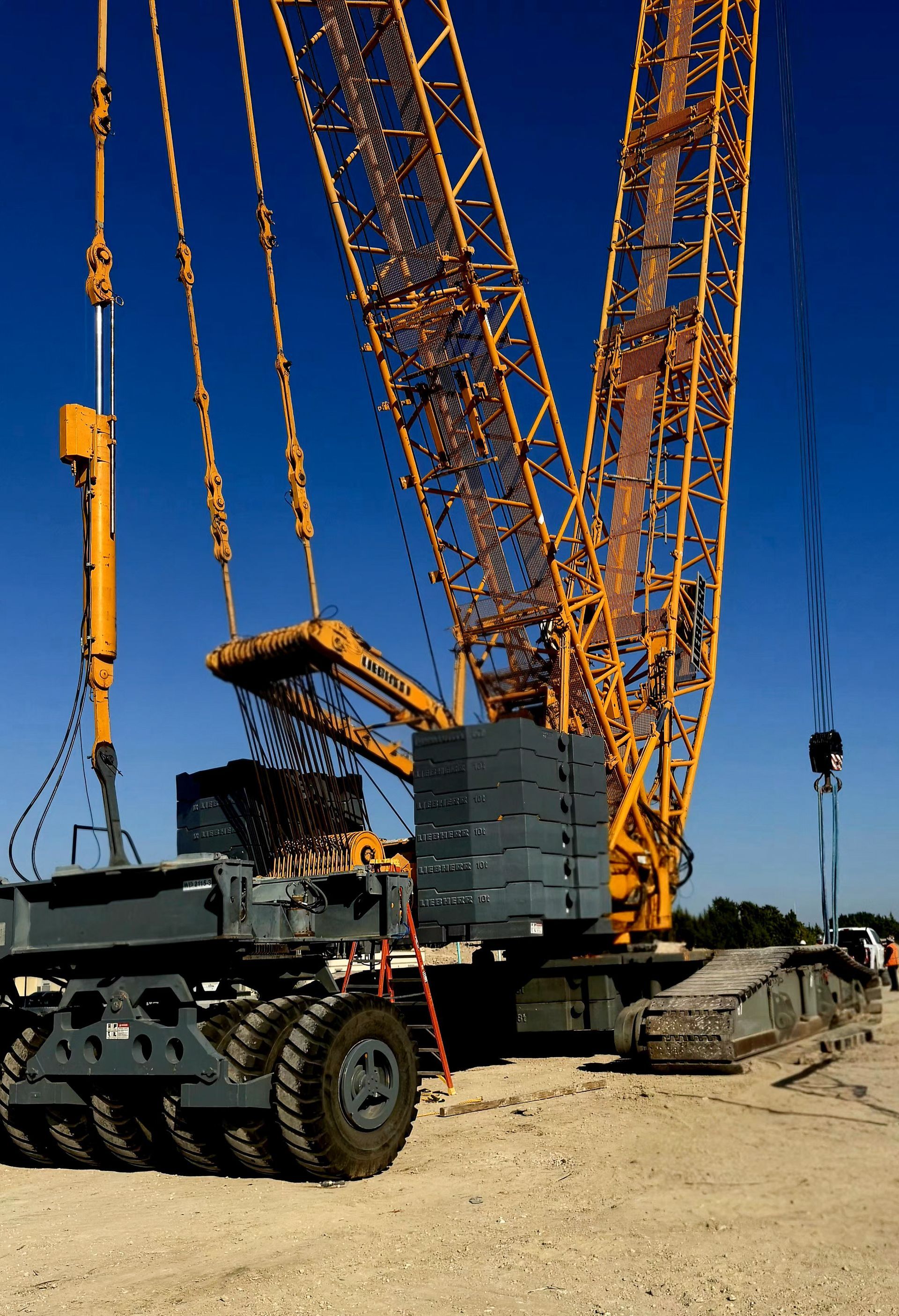
Crawler cranes are heavy-duty cranes designed for large, complex, and long-duration lifting operations. Unlike RT cranes, crawler cranes move on tracks and are typically assembled on site.


Key Characteristics of Crawler Cranes


  • Lattice boom configuration

  • Tracked undercarriage

  • High lifting capacity

  • Exceptional stability

  • Ability to travel with load (within limits)

Crawler cranes are engineered for demanding industrial environments where precision and stability are critical.


Best Applications for Crawler Cranes


Crawler cranes are the preferred choice for projects involving heavy components, long lift durations, or minimal tolerance for movement or error.


Crawler cranes are commonly used for:


  • Heavy and critical lifts

  • Large structural steel erection

  • Industrial facility construction

  • Long-duration projects

  • Projects requiring large radii or significant reach

Because crawler cranes can remain assembled and positioned for extended periods, they are ideal for phased construction and repetitive heavy lifting.


Limitations of Crawler Cranes


Crawler cranes offer unmatched capacity and stability, but they come with trade-offs.


Limitations include:


  • Higher mobilization and demobilization costs

  • Longer setup time

  • Larger footprint requirements

  • Greater planning and logistics complexity

For smaller or short-term projects, the additional cost and time may outweigh the benefits.


RT Cranes vs. Crawler Cranes: Key Differences


Understanding the practical differences between RT cranes and crawler cranes helps clarify which is right for your project.


Mobility


  • RT Crane: High mobility, easy repositioning

  • Crawler Crane: Limited repositioning once assembled

Capacity


  • RT Crane: Moderate lifting capacity

  • Crawler Crane: High to extremely high lifting capacity

Setup Time


  • RT Crane: Minimal setup

  • Crawler Crane: Requires assembly and planning

Project Duration


  • RT Crane: Best for short-term or intermittent work

  • Crawler Crane: Best for long-term or phased projects

Site Requirements


  • RT Crane: Compact footprint

  • Crawler Crane: Requires more space and ground preparation


How Engineered Lift Planning Influences Crane Selection


Crane selection should never be based on intuition alone. Engineered lift planning evaluates:


  • Load weight and dimensions

  • Pick and set radius

  • Ground bearing capacity

  • Site access and restrictions

  • Lift frequency and sequencing

In many cases, engineered lift planning reveals that a crane initially thought to be sufficient is not the safest or most efficient option.


Ground Conditions: A Critical Factor


Ground conditions play a major role in crane selection.


RT cranes may perform well on compacted or prepared surfaces but can be limited by ground bearing pressures during heavier lifts.


Crawler cranes distribute weight more evenly through tracks, making them better suited for:


  • Soft or variable soil conditions

  • Long-term placement

  • Heavy loads over extended durations

Ignoring ground conditions can compromise safety regardless of crane type.


Cost Considerations: Short-Term vs. Long-Term Thinking


While RT cranes often have lower upfront costs, crawler cranes may be more cost-effective over the life of a large project.


RT cranes can become inefficient when:


  • Multiple cranes are required

  • Repositioning causes delays

  • Capacity limits slow production

Crawler cranes, while more expensive initially, often provide:


  • Faster lift cycles

  • Fewer mobilizations

  • Reduced schedule risk

The lowest daily rate does not always mean the lowest total project cost.


Why Integrated Planning Makes the Difference


Crane selection becomes far more effective when lift planning, crane operations, and supporting construction services are coordinated by one team.


When the same contractor handles:


  • Crane operations

  • Lift planning

  • Steel erection or fabrication support

Crane selection is aligned with real execution—not assumptions.


Final Thoughts


There is no “one-size-fits-all” crane solution. RT cranes and crawler cranes each serve critical roles on industrial and commercial projects.


The right choice depends on:


  • Project scope

  • Lift complexity

  • Site conditions

  • Schedule demands

  • Risk tolerance

By pairing experienced crane operations with engineered lift planning, project teams can select the right crane with confidence and avoid costly surprises.

Search

Recent Post
Orange mobile crane on wheels outdoors.
January 24, 2026
Crane operations are among the most safety-critical activities on industrial and commercial construction sites. The combination of heavy loads, suspended lifts, tight tolerances, and active jobsites creates inherent risk that must be managed carefully. While equipment selection and lift planning are essential, the single most important factor in crane safety is the people performing the work . Certified crane operators and qualified rigging crews play a direct role in preventing incidents, protecting personnel, and keeping projects on schedule. Why Crane Safety Is Different from Other Trades Unlike many construction activities, crane operations involve suspended loads that can affect large areas of a jobsite. A single lift can: Pass over active work zones Impact multiple trades simultaneously Create consequences far beyond the immediate work area Because of this, mistakes during crane operations tend to have higher consequences than errors in many other scopes of work. What Certification Really Means Certification is not just a credential—it represents verified competency. Certified crane operators and rigging personnel have demonstrated: Knowledge of equipment capabilities and limitations Understanding of load dynamics and rigging principles Familiarity with safety standards and procedures Ability to respond to changing jobsite conditions Certification provides assurance that the individual has met recognized industry benchmarks, not just on-the-job experience. The Role of Certified Crane Operators Certified crane operators are trained to understand far more than basic crane controls. Their responsibilities extend into planning, communication, and situational awareness. Key Responsibilities of Certified Operators Verifying crane configuration and setup Understanding load charts and capacity limits Monitoring wind and environmental conditions Communicating clearly with rigging crews and signal persons Stopping operations when conditions become unsafe An experienced, certified operator knows when not to make a lift—often preventing incidents before they happen. Why Rigging Crews Matter Just as Much Rigging crews are responsible for how loads are attached, balanced, and controlled during a lift. Improper rigging is a leading cause of crane-related incidents. Qualified rigging crews understand: Load weight distribution Sling selection and angles Hardware ratings and compatibility Redundancy and fail-safe practices Certified or trained riggers are far more likely to identify unsafe rigging configurations before a lift begins. Communication: The Backbone of Safe Lifts Safe crane operations rely on clear, disciplined communication. Certified operators and rigging crews are trained to: Use standardized hand signals Follow radio communication protocols Conduct pre-lift briefings Confirm lift plans before execution When communication breaks down, even the best equipment and planning cannot compensate. Situational Awareness on Active Jobsites Industrial jobsites are dynamic environments. Conditions can change rapidly due to: Weather Nearby operations Equipment movement Schedule pressures Certified crews are trained to maintain situational awareness and adjust operations as conditions evolve. This awareness often prevents unsafe lifts caused by rushed decisions or changing site conditions. Certification Reduces “Normalization of Risk” One of the most dangerous patterns on construction sites is the normalization of risk—when unsafe practices become routine because “nothing bad has happened yet.” Certified operators and riggers are trained to recognize: Unsafe shortcuts Deviations from approved lift plans Pressure to rush or bypass procedures Their training reinforces that safety standards exist for a reason, even when shortcuts appear faster. The Impact on Jobsite Culture Certified crane crews often elevate safety culture across the entire jobsite. Their presence encourages: Better planning and preparation More disciplined execution Increased awareness among other trades Respect for exclusion zones and lift boundaries When crane operations are executed professionally, other trades tend to follow suit. How Certification Improves Incident Prevention Most crane incidents are preceded by warning signs: Marginal capacity Poor rigging angles Ground instability Communication confusion Certified personnel are trained to identify and address these warning signs before they escalate. This proactive approach significantly reduces: Near-misses Property damage Injury risk OSHA reportable incidents Safety and Schedule Are Not Opposites A common misconception is that safety slows projects down. In reality, unsafe operations are one of the biggest causes of delays. Certified crews help maintain schedule by: Avoiding stoppages caused by unsafe conditions Reducing rework from damaged materials Preventing incidents that shut down jobsites Safe operations are often the most efficient operations. Why Certification Matters to Owners and GCs From an owner or general contractor perspective, certified crane crews reduce risk exposure. Benefits include: Lower likelihood of incidents Improved compliance with safety requirements Reduced insurance and liability concerns Greater confidence during audits and inspections Many owners now require certified operators and riggers as a condition of working on their projects. Certification Alone Is Not Enough While certification is critical, it is most effective when paired with experience and proper planning. The strongest crane operations combine: Certified operators Qualified rigging crews Engineered lift planning Clear communication Integrated coordination with other trades Certification sets the baseline—but execution brings it to life. The Value of Operating as a Coordinated Team Crane safety improves significantly when operators, riggers, and supporting crews work together consistently. Teams that operate regularly together: Communicate more effectively Anticipate each other’s actions Execute lifts more smoothly Respond faster to unexpected conditions This coordination reduces uncertainty during critical lifts. Why Experienced Contractors Prioritize Certification Experienced crane contractors understand that certifications protect: People Equipment Schedules Reputations They view certified crews not as an added cost, but as a risk-management investment that pays dividends over time. Final Thoughts Crane operations will always involve risk—but that risk can be managed effectively. Certified crane operators and rigging crews: Improve jobsite safety Reduce incidents and delays Support compliance and accountability Strengthen project outcomes When safety-critical work is entrusted to trained, certified professionals, crane operations become more predictable, controlled, and reliable. On industrial and commercial projects, who performs the lift matters just as much as how it is planned .
Orange mobile crane on a paved surface. It has a cab and is set in an outdoor area.
January 24, 2026
On industrial and commercial construction projects, crane operations are often on the critical path. When a crane is delayed, the entire jobsite feels it—crews stand idle, schedules slip, and costs rise quickly. Most crane-related delays are not caused by mechanical failure. They are the result of planning gaps, coordination breakdowns, and preventable mistakes that compound once work is underway. Understanding these common issues—and how to avoid them—can save significant time and money on crane-driven projects. 1. Inadequate Lift Planning One of the most common causes of crane delays is insufficient lift planning. When lifts are treated as routine without evaluating real-world conditions, problems surface quickly in the field. Common planning issues include: Incorrect load weight assumptions Incomplete rigging details Underestimating required radius or boom length Failing to account for site obstructions These issues often force last-minute changes, crane reconfiguration, or even demobilization and remobilization. How to avoid it: Use engineered lift planning for complex or high-risk lifts. Planning should account for actual site conditions, not best-case assumptions. 2. Choosing the Wrong Crane for the Job Selecting a crane based solely on availability or daily rate often leads to inefficiencies and delays. Examples include: Using an undersized crane that struggles at required radii Selecting a highly mobile crane when stability is the priority Choosing a crane that cannot remain set for the project duration When the crane is wrong for the application, productivity suffers and safety margins shrink. How to avoid it: Crane selection should be driven by engineered lift planning that evaluates capacity, radius, ground conditions, and sequencing—not convenience. 3. Poor Coordination Between Trades Crane operations depend on coordination with fabrication, erection, civil work, and other trades. When these activities are not aligned, delays are inevitable. Common coordination problems include: Materials not ready when the crane arrives Incomplete site access or ground prep Conflicting work areas Erection sequencing mismatches Even small misalignments can result in hours—or days—of lost crane time. How to avoid it: Coordinate crane operations early and continuously with all affected trades. Integrated planning reduces handoffs and miscommunication. 4. Inaccurate or Incomplete Fabrication Fabrication issues frequently create delays during crane operations. Examples include: Dimensional inaccuracies Missing lift points Unclear or incorrect shop drawings Components requiring field modification When fabricated components do not match lift plans, crane operations must stop while issues are resolved. How to avoid it: Ensure fabrication is coordinated with lift planning and erection requirements. When fabrication and crane services are aligned, these issues are identified earlier. 5. Inadequate Ground Preparation Ground conditions are a critical but often overlooked factor in crane operations. Delays occur when ground preparation does not meet actual crane requirements. Common problems include: Insufficient soil bearing capacity Missing or undersized crane mats Poor drainage or soft ground Unverified ground conditions These issues can halt crane setup entirely until corrective action is taken. How to avoid it: Evaluate ground conditions during planning and include crane mat requirements in the scope. Do not assume existing surfaces are adequate. 6. Weather-Related Oversights Weather impacts crane operations more than many teams anticipate. Wind, rain, and temperature extremes can all affect lift safety and feasibility. Typical oversights include: Ignoring wind limits for large surface-area loads Scheduling lifts during predictable weather windows Lack of contingency planning Weather-related delays are often blamed on “bad luck,” but many are predictable. How to avoid it: Include weather considerations in lift planning and schedule buffers. Establish clear go/no-go criteria before mobilization. 7. Unqualified Operators or Rigging Crews Crane operations are only as strong as the people executing them. Delays occur when crews lack the experience to adapt to changing conditions. Issues may include: Slow or hesitant crane operation Improper rigging setup Communication breakdowns during lifts Increased safety stoppages These problems can turn routine lifts into drawn-out operations. How to avoid it: Use operated crane services with certified operators and experienced rigging crews who are familiar with industrial environments. 8. Last-Minute Scope Changes Scope changes during crane operations almost always cause delays. Examples include: Changing lift locations Modifying component orientation Adding lifts not included in planning Adjusting sequencing mid-operation These changes often require re-planning, re-rigging, or crane repositioning. How to avoid it: Finalize scope and sequencing before crane mobilization. When changes are unavoidable, evaluate their impact through proper planning—not improvisation. 9. Lack of Clear Responsibility On projects with multiple subcontractors, delays often occur because no single party owns the crane operation holistically. Common questions that slow progress: Who approves lift readiness? Who coordinates access? Who resolves conflicts? Without clear ownership, decisions stall. How to avoid it: Establish a single point of responsibility for crane planning and execution. Integrated crane and construction support simplifies accountability. 10. Treating Crane Time as Unlimited Crane time is expensive and finite. Delays multiply when crane operations are treated as flexible rather than schedule-critical. Examples include: Using crane time for tasks that could be staged earlier Poor sequencing that increases crane idle time Lack of urgency around crane-related work This approach quickly inflates costs. How to avoid it: Treat crane operations as schedule drivers. Plan work to maximize crane productivity and minimize idle time. The Cost of Crane-Related Delays Crane delays have a ripple effect: Increased labor costs Extended equipment rentals Missed milestones Compressed downstream schedules In industrial environments, these impacts are often magnified by limited shutdown windows or operational constraints. Why Experience Makes the Difference Most crane and rigging delays are preventable. The difference between a smooth operation and a delayed one often comes down to experience, planning, and coordination. Experienced crane contractors: Anticipate issues before mobilization Plan lifts realistically Coordinate effectively with other trades Adapt safely when conditions change Final Thoughts Crane and rigging delays are rarely caused by a single mistake. They result from small planning and coordination gaps that compound once work begins. By recognizing common pitfalls and addressing them early—through engineered lift planning, proper crane selection, qualified crews, and integrated coordination—project teams can keep crane operations moving safely and efficiently. When crane operations are treated as the critical path they truly are, delays become the exception—not the norm.
Construction crane lifting at a building site, overcast sky.
January 24, 2026
On industrial and commercial construction projects, risk rarely comes from a single failure. More often, it builds quietly through miscommunication, handoffs between subcontractors, and assumptions about who is responsible for what. When crane operations are involved, those risks increase significantly. One of the most effective ways to reduce risk on crane-driven projects is to consolidate scope under a single contractor who can manage crane operations, fabrication, and erection together. This integrated approach improves coordination, accountability, and predictability—especially on projects where lifting activities are on the critical path. The Hidden Risk of Fragmented Scope Traditional project delivery often separates crane services, fabrication, and erection among multiple subcontractors. While this approach may appear flexible on paper, it frequently introduces real-world challenges. Common issues include: Misaligned schedules between trades Incomplete or incompatible fabrication details Last-minute field modifications Disputes over responsibility Delays caused by coordination gaps Each subcontractor may perform their individual scope correctly, yet the overall project still suffers because no single party owns the full process. Crane Operations Amplify Coordination Risk Crane operations magnify coordination challenges because they interact with nearly every trade on site. Crane lifts depend on: Accurate fabrication dimensions Correct sequencing of erection activities Proper site access and ground preparation Timely availability of materials and crews When crane services are disconnected from fabrication and erection, even small discrepancies can cause major delays. Where Things Commonly Break Down Projects with fragmented crane and construction scopes often experience predictable failure points. Fabrication Misalignment Fabricated steel or piping that does not align with lift plans can require: Field modifications Additional crane time Re-rigging or re-lifting Schedule impacts These issues are rarely intentional—they result from lack of coordination between fabrication and lift planning. Erection Sequencing Conflicts Steel erection requires precise sequencing. When erection crews and crane operators are not aligned: Lifts may be scheduled out of order Cranes may need repositioning Additional mobilizations may be required Each adjustment adds cost and risk. Responsibility Gaps When multiple subcontractors are involved, accountability can become unclear. Questions like: Who verifies lift readiness? Who coordinates crane access? Who resolves conflicts in the field? Without a single point of responsibility, issues take longer to resolve—and often escalate. The Advantage of a Single, Integrated Contractor Using one contractor for crane operations, fabrication, and erection changes the project dynamic entirely. Instead of managing handoffs between multiple subs, project teams work with a single entity responsible for: Planning Execution Coordination Outcomes This model significantly reduces risk on complex, crane-driven projects. Integrated Planning Improves Execution When one contractor handles both planning and execution: Lift plans reflect real fabrication details Crane selection aligns with erection sequencing Site constraints are addressed early This alignment reduces assumptions and improves predictability. Fewer Handoffs, Fewer Errors Every handoff between subcontractors introduces potential error. An integrated contractor reduces: Miscommunication Duplicate effort Conflicting assumptions With fewer parties involved, information flows faster and decisions are made more efficiently. Improved Schedule Control Crane operations often dictate the pace of construction. When crane services are integrated with fabrication and erection: Scheduling becomes more realistic Lift timing aligns with material readiness Delays are easier to mitigate This is especially valuable on projects with tight timelines or limited crane availability. Better Risk Management Integrated contractors are better positioned to identify and manage risk because they see the entire scope—not just isolated tasks. This includes: Identifying lift challenges during fabrication Adjusting erection sequencing proactively Planning crane access alongside civil and concrete work Risk is addressed early, when solutions are easier and less costly. Safety Benefits of Integrated Execution Safety improves when crane operations, fabrication, and erection are coordinated by one team. Benefits include: Consistent safety standards across scopes Clear communication during lifts Fewer last-minute changes Better jobsite awareness When crews understand the full process, they are better prepared to execute safely. Cost Predictability Over Lowest Price While integrated services may not always appear lowest-cost upfront, they often reduce total project cost. Cost savings come from: Fewer delays Reduced rework Lower crane standby time Fewer change orders For owners and general contractors, predictability often matters more than initial price. Integrated Support Is Especially Valuable on Industrial Projects Industrial projects present unique challenges: Active facilities Restricted access High safety requirements Tight shutdown windows In these environments, coordination failures can be extremely costly. Integrated crane and construction support provides better control over these variables. When Integrated Services Make the Most Sense While not every project requires integrated services, they are especially beneficial when: Crane operations are on the critical path Lifts are complex or high-risk Fabrication tolerances are tight Schedule flexibility is limited Multiple trades must coordinate closely These conditions are common on industrial and commercial projects. A Shift Toward Accountability Using one contractor for crane operations, fabrication, and erection creates clear accountability. Instead of managing disputes between subs, project teams work with a partner who: Owns the plan Executes the work Resolves issues Delivers results This shift simplifies decision-making and improves outcomes. Final Thoughts Crane operations introduce significant risk—but that risk can be managed effectively through integration. By consolidating crane services, fabrication, and erection under one contractor, project teams gain: Better coordination Improved safety Stronger schedule control Clear accountability For industrial and commercial projects where crane operations drive success, integration is not just a convenience—it’s a strategic advantage.
Construction site with multiple cranes over a building frame. Red and yellow cranes stand against a blue sky.
January 24, 2026
On industrial and commercial construction sites, crane operations are often the most complex and highest-risk activities taking place. When loads are heavy, clearances are tight, or consequences are severe, an engineered lift plan becomes a critical part of safe and successful execution. Engineered lift planning is not just paperwork—it is a process that directly affects safety, schedule, and cost. Understanding what goes into a proper lift plan helps project managers, general contractors, and facility owners make better decisions and avoid costly mistakes. What Is an Engineered Lift Plan? An engineered lift plan is a detailed, technical analysis of how a crane lift will be executed safely and efficiently. It evaluates every variable that can affect the lift, from crane capacity and load weight to site conditions and sequencing. Unlike basic lift sketches or generic checklists, engineered lift plans are used for: Heavy lifts Critical lifts Complex or high-risk lifts Lifts performed in active facilities Lifts with limited margins for error In many cases, engineered lift plans are supported by 3D lift modeling , which allows project teams to visualize the lift before execution and identify conflicts that may not be obvious on paper. When Is an Engineered Lift Plan Required? While requirements vary by project and owner, engineered lift plans are typically required when: Load weight approaches a high percentage of crane capacity Lifts occur over occupied areas or active equipment Multiple cranes are involved Site access or setup is restricted Consequences of failure are severe Even when not explicitly required, experienced contractors often choose engineered lift planning because it reduces risk and improves coordination. Key Components of an Engineered Lift Plan A proper engineered lift plan is comprehensive. Each component plays a role in ensuring the lift can be performed safely under real-world conditions. 1. Load Analysis The foundation of any lift plan is an accurate understanding of the load. This includes: Verified load weight Center of gravity Load dimensions Rigging attachment points Incorrect assumptions about load weight or balance are one of the most common causes of crane incidents. 2. Crane Selection & Configuration Selecting the correct crane is not simply about maximum capacity. Engineers evaluate: Crane type Boom length Configuration and counterweight Radius at pick and set Capacity at each stage of the lift This ensures the crane can safely handle the load throughout the entire lift—not just at the heaviest point. 3. Rigging Design Rigging design is a critical safety element and often overlooked. A proper lift plan accounts for: Sling types and ratings Hardware selection Load angles Redundancy where required Rigging must be designed for real load conditions, not idealized assumptions. 4. Ground Conditions & Crane Support Crane capacity means nothing if the ground cannot support it. Engineered lift plans evaluate: Soil bearing capacity Crane mat requirements Ground preparation needs Potential settlement or instability Failure to address ground conditions can result in crane instability even when the lift itself is properly planned. 5. Lift Path & Site Constraints The lift path must be evaluated from pick to set. This includes: Clearances from structures and utilities Interference with other equipment Overhead obstructions Swing radius and tail swing 3D lift planning is especially valuable here, as it allows teams to identify conflicts before mobilization. 6. Lift Sequencing & Timing Complex projects often require multiple lifts or staged operations. An engineered lift plan addresses: Sequence of lifts Crane repositioning Coordination with other trades Timing relative to site operations This reduces downtime and prevents conflicts on active jobsites. 7. Risk Assessment & Contingencies No lift plan is complete without addressing potential risks. This includes: Wind limits Weather considerations Emergency procedures Contingency plans Planning for “what if” scenarios helps crews respond effectively if conditions change. The Role of 3D Lift Planning 3D lift planning has become increasingly important on modern industrial projects. By modeling cranes, loads, and site conditions digitally, teams can: Visualize complex lifts Identify clearance issues Validate crane positioning Improve communication with stakeholders 3D plans are especially useful when coordinating with owners, engineers, and safety teams who need to understand the lift before approving it. How Engineered Lift Plans Improve Safety Most crane incidents are not caused by equipment failure—they are caused by planning failures. Engineered lift plans: Reduce guesswork Improve decision-making Ensure compliance with safety requirements Provide clear guidance to operators and riggers When everyone understands the plan, execution becomes more predictable and controlled. How Lift Planning Impacts Schedule & Cost While engineered lift planning requires upfront effort, it often saves time and money overall. Benefits include: Fewer delays caused by unforeseen issues Reduced rework and field modifications More efficient crane utilization Better coordination between trades In many cases, a well-planned lift can be executed faster than an unplanned one, even with the added planning time. The Importance of Integrated Planning & Execution One of the most overlooked aspects of lift planning is alignment between the team that plans the lift and the team that executes it. When crane services, rigging, and supporting construction work are coordinated under one contractor: Plans are more realistic Execution matches intent Accountability is clear This is especially important on projects where crane operations are on the critical path. Why Experience Matters Engineered lift plans are only as good as the experience behind them. Understanding how cranes behave in real-world conditions—wind, terrain, access, and sequencing—comes from time in the field. Experienced crane contractors use engineered planning not as a formality, but as a tool to deliver safer, more predictable results. Final Thoughts Engineered lift planning is a critical component of successful industrial crane operations. It protects people, equipment, and schedules by addressing risk before it becomes a problem. For complex or high-risk lifts, the question should not be “Do we need a lift plan?” It should be “Is this lift engineered properly?” When planning and execution are aligned, crane operations become safer, smoother, and more reliable.