What Goes Into an Engineered Lift Plan for Industrial Crane Projects?
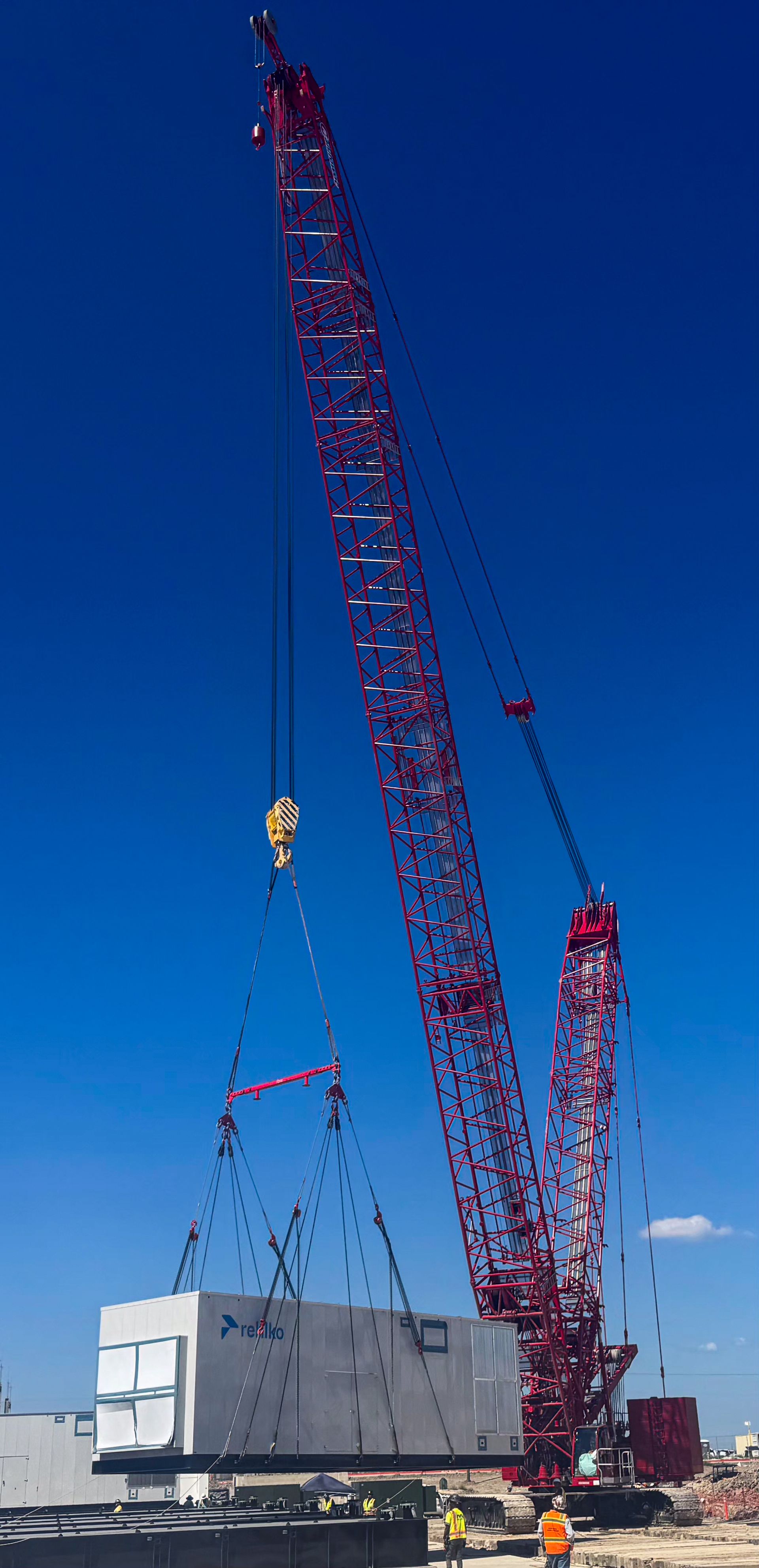
On industrial and commercial construction sites, crane operations are often the most complex and highest-risk activities taking place. When loads are heavy, clearances are tight, or consequences are severe, an engineered lift plan becomes a critical part of safe and successful execution.
Engineered lift planning is not just paperwork—it is a process that directly affects safety, schedule, and cost. Understanding what goes into a proper lift plan helps project managers, general contractors, and facility owners make better decisions and avoid costly mistakes.
What Is an Engineered Lift Plan?
An engineered lift plan is a detailed, technical analysis of how a crane lift will be executed safely and efficiently. It evaluates every variable that can affect the lift, from crane capacity and load weight to site conditions and sequencing.
Unlike basic lift sketches or generic checklists, engineered lift plans are used for:
- Heavy lifts
- Critical lifts
- Complex or high-risk lifts
- Lifts performed in active facilities
- Lifts with limited margins for error
In many cases, engineered lift plans are supported by 3D lift modeling, which allows project teams to visualize the lift before execution and identify conflicts that may not be obvious on paper.
When Is an Engineered Lift Plan Required?
While requirements vary by project and owner, engineered lift plans are typically required when:
- Load weight approaches a high percentage of crane capacity
- Lifts occur over occupied areas or active equipment
- Multiple cranes are involved
- Site access or setup is restricted
- Consequences of failure are severe
Even when not explicitly required, experienced contractors often choose engineered lift planning because it reduces risk and improves coordination.
Key Components of an Engineered Lift Plan
A proper engineered lift plan is comprehensive. Each component plays a role in ensuring the lift can be performed safely under real-world conditions.
1. Load Analysis
The foundation of any lift plan is an accurate understanding of the load.
This includes:
- Verified load weight
- Center of gravity
- Load dimensions
- Rigging attachment points
Incorrect assumptions about load weight or balance are one of the most common causes of crane incidents.
2. Crane Selection & Configuration
Selecting the correct crane is not simply about maximum capacity. Engineers evaluate:
- Crane type
- Boom length
- Configuration and counterweight
- Radius at pick and set
- Capacity at each stage of the lift
This ensures the crane can safely handle the load throughout the entire lift—not just at the heaviest point.
3. Rigging Design
Rigging design is a critical safety element and often overlooked.
A proper lift plan accounts for:
- Sling types and ratings
- Hardware selection
- Load angles
- Redundancy where required
Rigging must be designed for real load conditions, not idealized assumptions.
4. Ground Conditions & Crane Support
Crane capacity means nothing if the ground cannot support it.
Engineered lift plans evaluate:
- Soil bearing capacity
- Crane mat requirements
- Ground preparation needs
- Potential settlement or instability
Failure to address ground conditions can result in crane instability even when the lift itself is properly planned.
5. Lift Path & Site Constraints
The lift path must be evaluated from pick to set.
This includes:
- Clearances from structures and utilities
- Interference with other equipment
- Overhead obstructions
- Swing radius and tail swing
3D lift planning is especially valuable here, as it allows teams to identify conflicts before mobilization.
6. Lift Sequencing & Timing
Complex projects often require multiple lifts or staged operations.
An engineered lift plan addresses:
- Sequence of lifts
- Crane repositioning
- Coordination with other trades
- Timing relative to site operations
This reduces downtime and prevents conflicts on active jobsites.
7. Risk Assessment & Contingencies
No lift plan is complete without addressing potential risks.
This includes:
- Wind limits
- Weather considerations
- Emergency procedures
- Contingency plans
Planning for “what if” scenarios helps crews respond effectively if conditions change.
The Role of 3D Lift Planning
3D lift planning has become increasingly important on modern industrial projects. By modeling cranes, loads, and site conditions digitally, teams can:
- Visualize complex lifts
- Identify clearance issues
- Validate crane positioning
- Improve communication with stakeholders
3D plans are especially useful when coordinating with owners, engineers, and safety teams who need to understand the lift before approving it.
How Engineered Lift Plans Improve Safety
Most crane incidents are not caused by equipment failure—they are caused by planning failures.
Engineered lift plans:
- Reduce guesswork
- Improve decision-making
- Ensure compliance with safety requirements
- Provide clear guidance to operators and riggers
When everyone understands the plan, execution becomes more predictable and controlled.
How Lift Planning Impacts Schedule & Cost
While engineered lift planning requires upfront effort, it often saves time and money overall.
Benefits include:
- Fewer delays caused by unforeseen issues
- Reduced rework and field modifications
- More efficient crane utilization
- Better coordination between trades
In many cases, a well-planned lift can be executed faster than an unplanned one, even with the added planning time.
The Importance of Integrated Planning & Execution
One of the most overlooked aspects of lift planning is alignment between the team that plans the lift and the team that executes it.
When crane services, rigging, and supporting construction work are coordinated under one contractor:
- Plans are more realistic
- Execution matches intent
- Accountability is clear
This is especially important on projects where crane operations are on the critical path.
Why Experience Matters
Engineered lift plans are only as good as the experience behind them. Understanding how cranes behave in real-world conditions—wind, terrain, access, and sequencing—comes from time in the field.
Experienced crane contractors use engineered planning not as a formality, but as a tool to deliver safer, more predictable results.
Final Thoughts
Engineered lift planning is a critical component of successful industrial crane operations and a core part of our reliable crane services in Texas. It protects people, equipment, and schedules by addressing risk before it becomes a problem.
For complex or high-risk lifts, the question should not be
“Do we need a lift plan?”
It should be “Is this lift engineered properly?”
When planning and execution are aligned, crane operations become safer, smoother, and more reliable.
Search
Recent Post